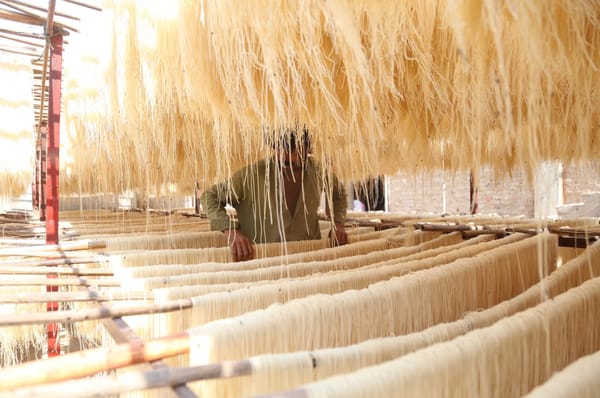
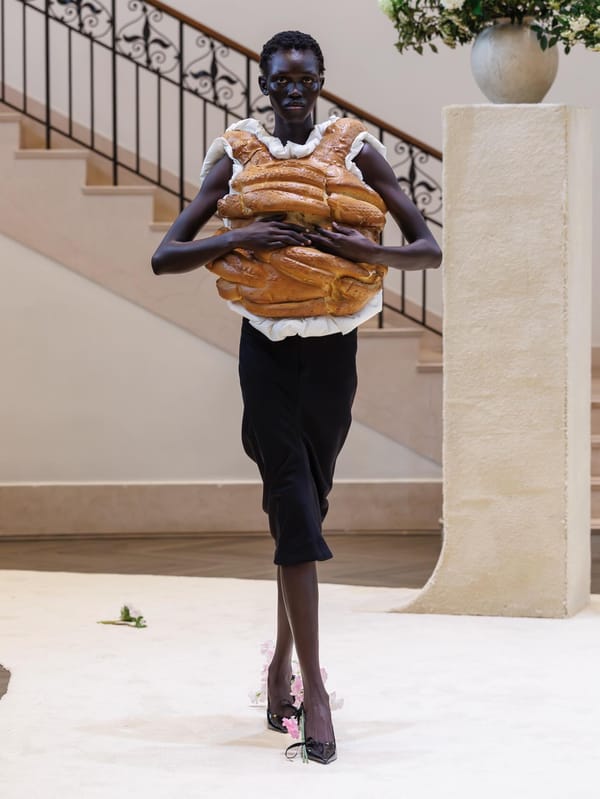
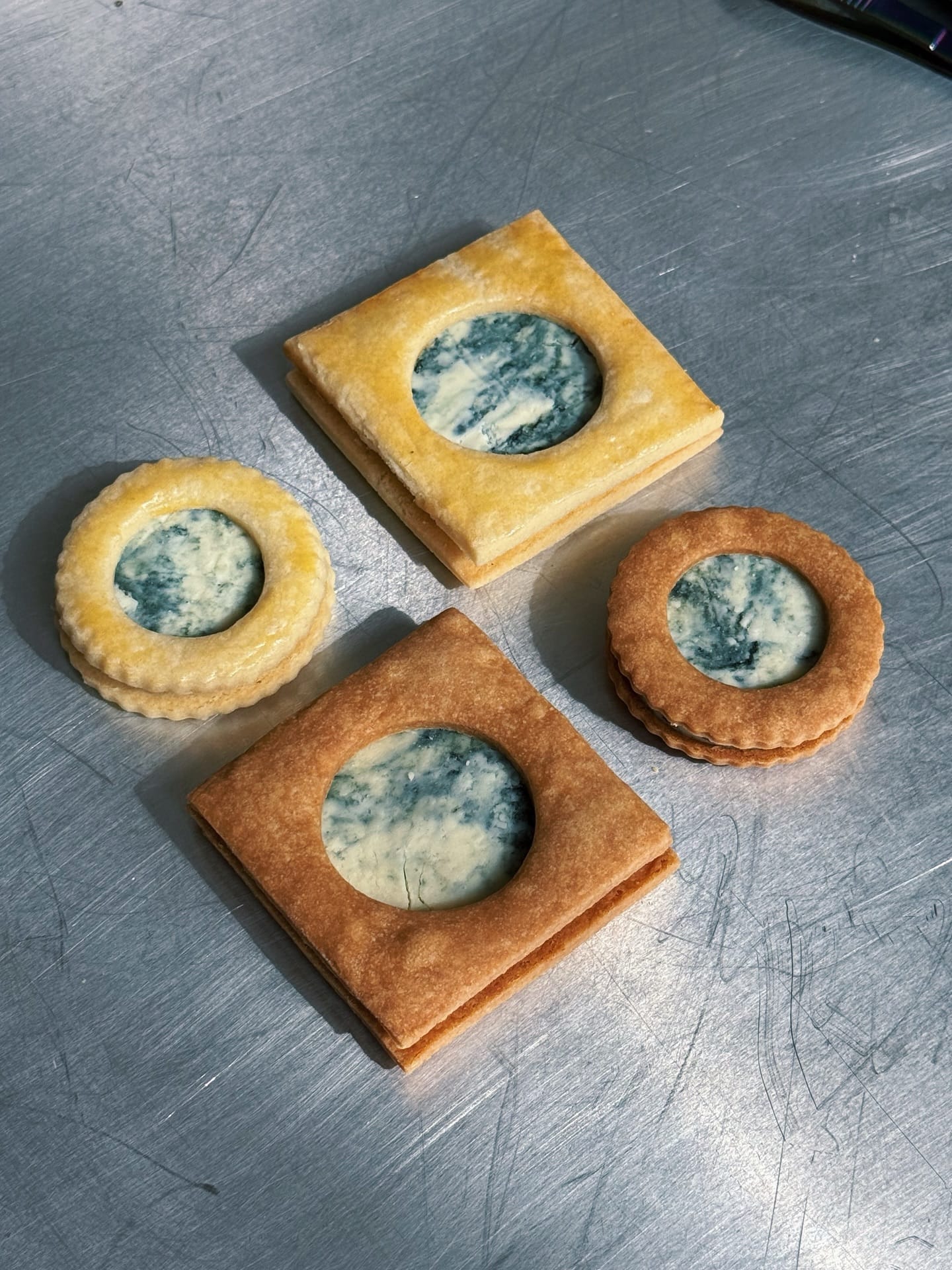
Blue Cheese Windows and Maximalist Parties🪟

Welcome to Secret Breakfast / The best place to start using churro umbrellas, Stilton apertures, and meeting random strangers to eat fried starchy tuberous vegetables
Hi there!
You're probably wondering how my diet is going. No? Doesn't matter.
This week I'm using AI to navigate a low-calorie diet — I gave it my doctor's orders and asked it to redesign my meals: same macros, same calories, but built around seasonal local vegetables and a Japanese-style dinner every night called Ichijū Sansai (literally: one soup, three sides).
Three courses, very small. One soup. Also small.
If I can't eat everything, and I can't travel for a while, at least I can travel in my imagination.
Piero
PS: no, unfortunately my diet doesn't work with the Italian principle Pizza and Negroni everynight.

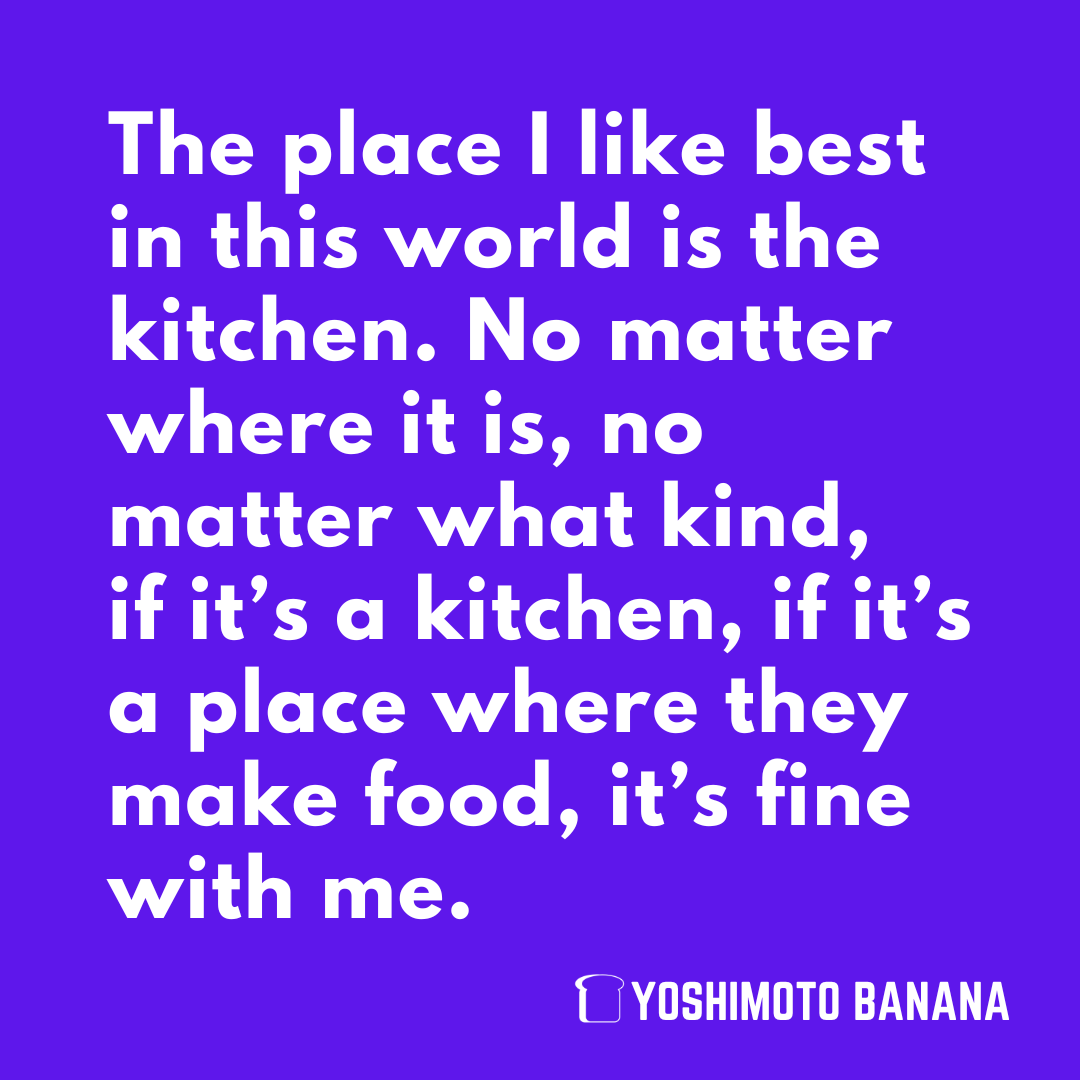
✹Yoshimoto Banana, Kitchen. This week we get to the basics.

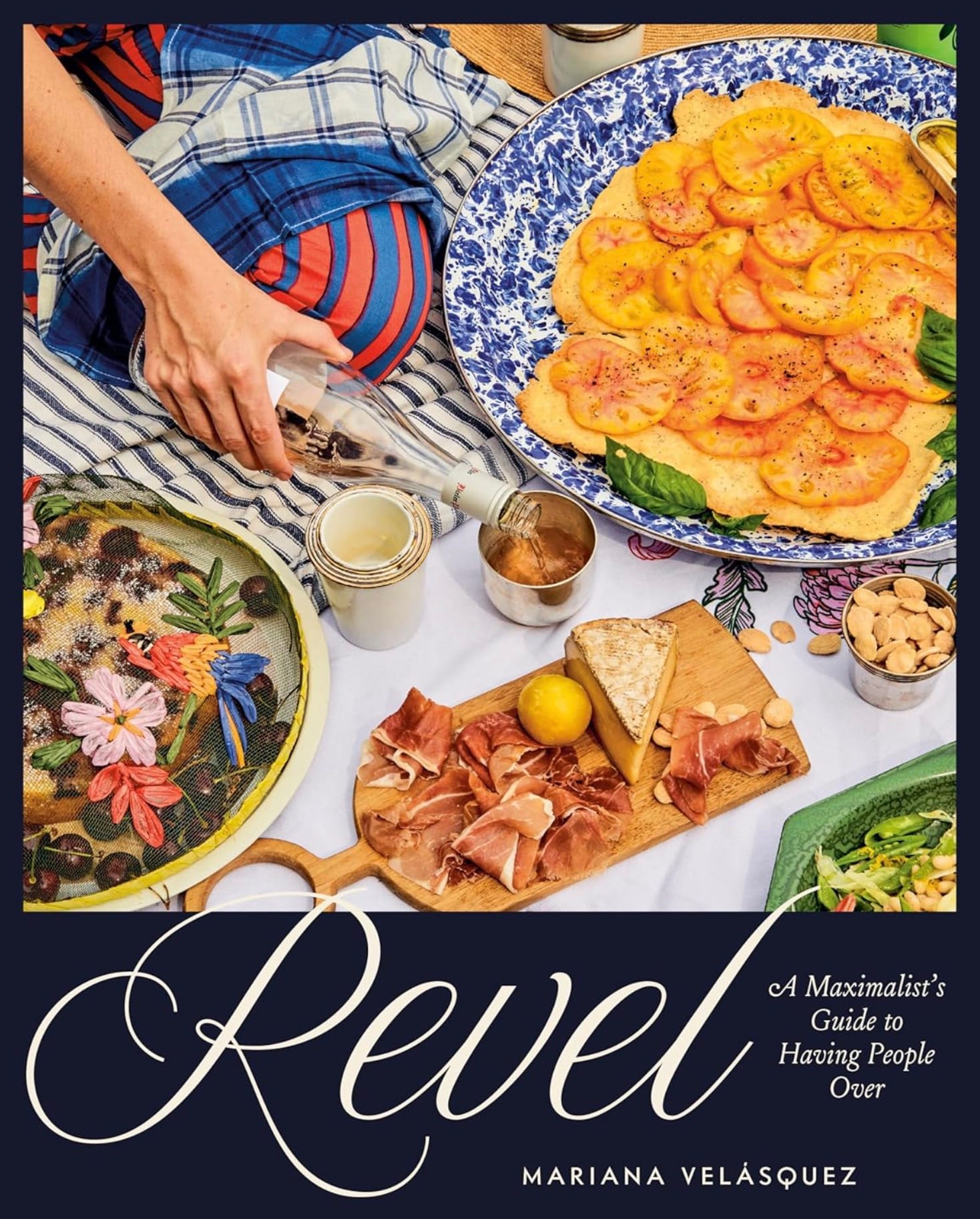
The Art of the Party, Maximized
Maximalism in entertaining never really died — it just waited for the right host to bring it back. In a publishing moment crowded with casual, low-effort hosting guides, this "Maximalist's Guide to Having People Over" makes the case that a party worth throwing is worth doing with intention, beauty, and a little theatrical flair. Written by Mariana Velásquez — chef, food stylist, and housewares designer — the book offers 85 recipes across 15 menus organized by time of day, from breakfast in bed to late evening cocktails, each with a detailed plan that starts not with what to cook, but with why you're hosting at all. Velásquez's approach is glamorous but never intimidating: her deconstructed pie bar and crowd-sized omelet roulade are as achievable as they are photogenic, proof that maximalism, at its best, is just generosity with good taste.
Revel: A Maximalist's Guide to Having People Over by Mariana Velásquez
→ Shortplot: 🍷 🍰 🌺 🍒

They were also having dinner
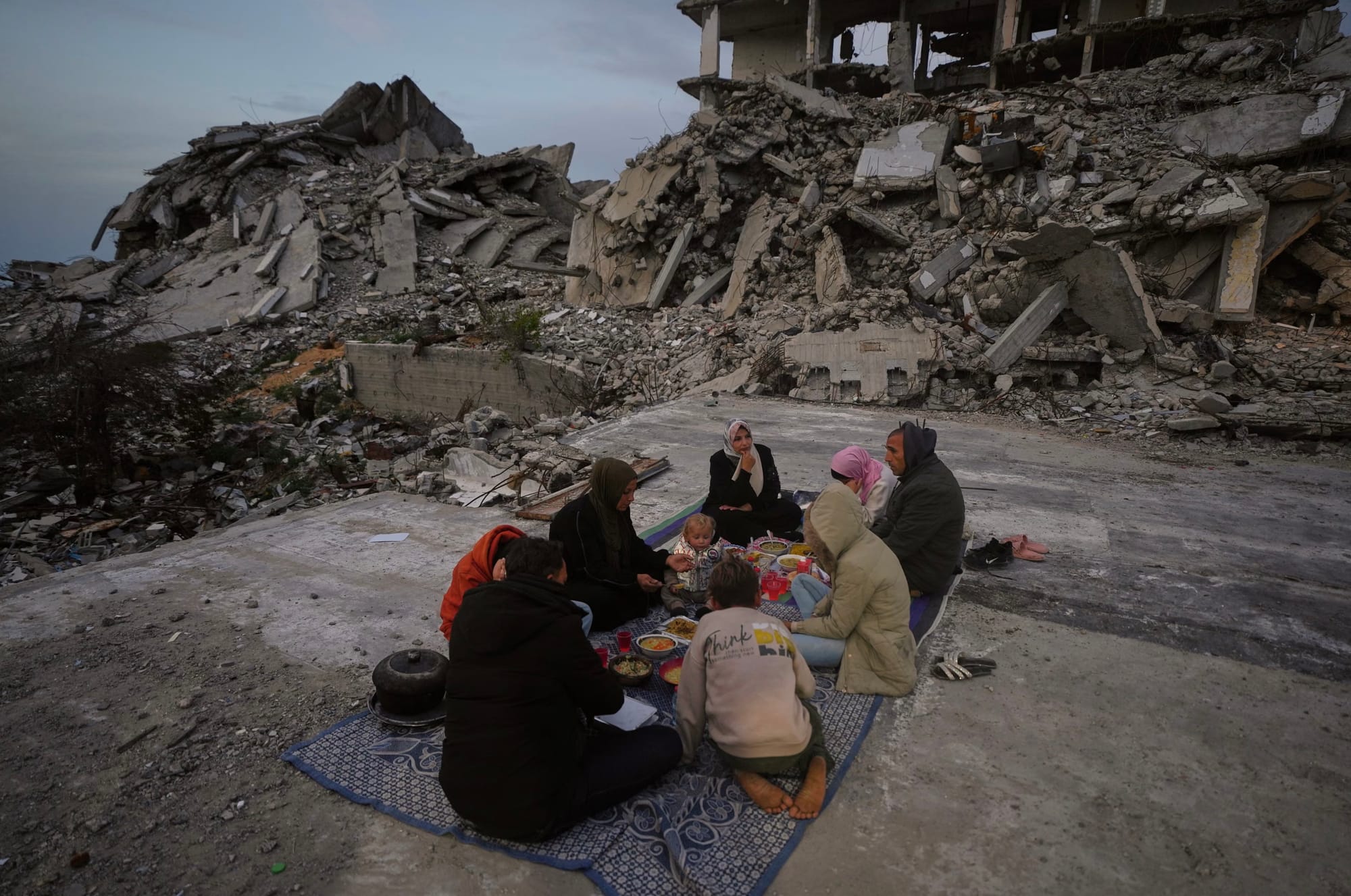
We often photograph our dinner plates. Or we stretch an arm across the table and capture a selfie, because that moment deserves to be remembered. Fair enough.
But sometimes reality doesn't pose. Sometimes the frame holds a family breaking their Ramadan fast amid rubble, in a city that no longer exists as they knew it. Same gesture — gathering around food — but no filter softens it, no caption makes it lighter.
The photograph is still an act of memory. Just a different kind.


🍟Why young Koreans are meeting strangers to eat french fries together (it's not the fries) 🎞️The 20 Best Food Scenes in Movies 🍽️The Dishwasher and the things in food invented by women 👰🏻♀️From Churro Umbrellas to Butter Art: Inside the High-Drama Wedding Food Trends for 2026 ❄️Super cool: Whats in a Private Chef's Freezer 💣René Redzepi's Last Words 🍪Nigel Slater’s recipe for almond and marzipan biscuits (★recipe) 🌍Zanzibari Pizza, Chaat Party and 21 Recipes and 3 Menus for the Ultimate African Gathering (★recipes, partially paywalled)

He Came to New York for Fun. He Left Seeking $20 Million in Damages
Christopher Maag / The New York Times
Faycal Manz, a German tourist, claimed that a taco had given him diarrhea, a Walmart store had discriminated against him and that an interaction with the police had given him insomnia. I don't even know where to start.
Nobody Gets Promoted for Simplicity
Matheus Lima / Terrible Software
Engineering teams keep promoting the person who overbuilds, not the one who solves the problem cleanly — and that quiet bias shapes entire careers. The essay argues that simplicity is the harder, smarter choice, but it's invisible by design: you can't write a compelling story about the complexity you avoided. The kitchen parallel writes itself: a chef who reduces a sauce to its purest three ingredients deserves more respect than one who piles on techniques to look impressive — and the best cooks, like the best engineers, know that restraint is the real skill.